

What Makes a Roof Uninsurable in California?
- Jul 10
- 7 min read
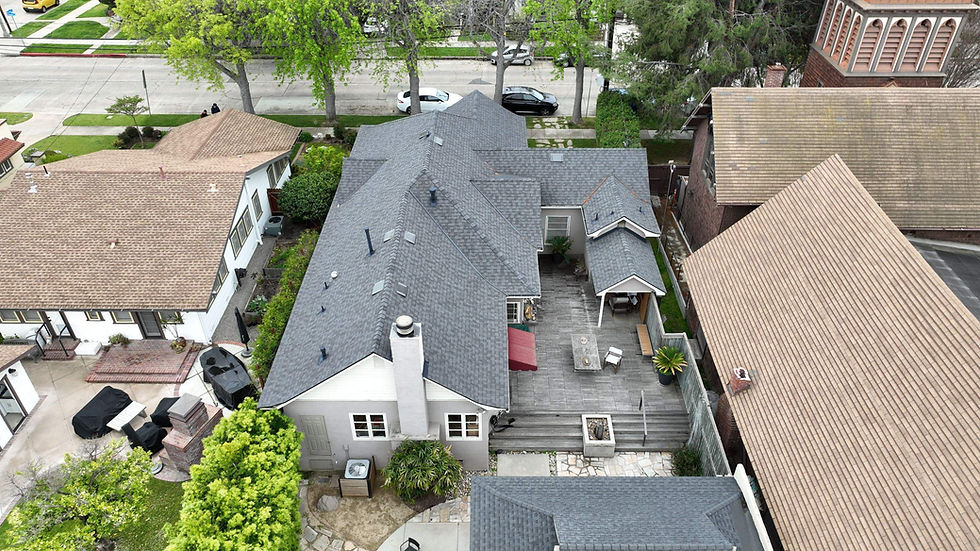
Your roof didn't change. Your insurance company did.
That's the honest explanation for what's happening to a lot of Southern California homeowners right now. Major carriers have been pulling out of California for years, and when they want to non-renew a policy, a roof condition flag is one of the cleanest ways to do it. A drone flies over your house, an algorithm flags something, and you get a letter giving you 45 to 60 days to fix it or lose coverage.
Sometimes the flagged issue is real. Sometimes it's a 10-year-old roof with a few lifted shingles that would cost a few hundred dollars to repair. Either way, the letter lands in your mailbox and feels like a crisis.
Here's what's actually going on and what you can do about it.
Why Insurers Flag Roofs in California
Insurance companies evaluate roof condition because your roof is the first line of defense against water intrusion. A roof that fails during a storm leads to interior damage, mold, structural issues, and expensive claims. That logic is legitimate.
What's changed in California is the threshold. Insurers who are actively looking for reasons to reduce their exposure in the state are applying stricter standards than they used five years ago. A roof that would have sailed through a renewal inspection in 2019 is now being flagged for the same condition it was always in.
The most common reasons a California roof gets flagged are age, visible surface wear, maintenance issues, and drainage problems on flat or low-slope roofs. None of these are automatic death sentences for your coverage. Most of them are fixable.
Age
This is the most common trigger and the one that creates the most anxiety. Insurance companies generally start scrutinizing roofs somewhere between 15 and 20 years old. Some carriers draw the line at 10 years for new policy applications.
The important thing to understand is that age alone is not the issue. A 22-year-old tile roof that has been properly maintained, has no missing or cracked tiles, and has solid flashing at every penetration is fundamentally different from a 22-year-old composition shingle roof with granule loss and exposed underlayment. The age on the calendar is a proxy for condition. When the insurer uses age as the reason, what they're really saying is that they expect a roof of that age to have problems.
In Southern California the degradation timeline is accelerated. UV exposure here is relentless. Heat cycles expand and contract roofing materials constantly. A shingle roof in Anaheim does show its age faster than the same roof in Seattle. That's a legitimate consideration, not insurance company paranoia.
Visible Damage and Deferred Maintenance
This is where the California insurance pullout gets frustrating. Insurers are flagging things that homeowners reasonably considered minor — a few missing shingles, some worn flashing around a chimney, granule loss in one area. These are not signs of a failed roof. They're signs of a roof that needs some attention.
The problem is that deferred maintenance is exactly what insurers are looking for right now. A small unrepaired issue is evidence that the roof is not being actively maintained. Insurers view that as a signal that bigger problems may develop. It also gives them a documented reason to non-renew.
The homeowners who get into real trouble are the ones who ignore the letter or assume the issue will resolve itself. It doesn't. The 60-day window to respond is real, and waiting uses it up.
Flat and Low-Slope Roof Issues
If you have a flat roof, drainage is the thing that matters most to insurers. Standing water on a flat or low-slope roof accelerates membrane deterioration, adds structural load, and signals inadequate drainage. An insurer who spots ponding water in aerial imagery is going to flag it every time.
For commercial property owners, this is the most common roof-related insurance issue we hear about. A flat commercial roof with blocked drains or a compromised membrane is both a real problem and an insurance liability. The fix is usually less expensive than people fear, but it has to actually get fixed.
Multiple Shingle Layers
Many homes in Southern California have had roofing work done over an existing layer rather than a full tear-off. Local building codes sometimes allow this. Insurance companies generally do not like it.
A multi-layer roof can mask underlying problems and adds weight to the structure. If your home has two layers of shingles, some insurers will require a complete tear-off before offering coverage, regardless of the apparent surface condition. This one can be a surprise if you did not know the previous owner had the roof overlaid.
What the Letter Actually Means
Getting a non-renewal notice because of your roof is not the same as being told your roof needs to be replaced. It means the insurer has identified something specific that, in their view, presents elevated risk.
The first thing to do is find out exactly what they flagged. Get the specific reason in writing. Then have a licensed roofing contractor get on your roof and look at what they're actually talking about.
Insurance companies sometimes flag roofs based on aerial imagery that misses context. A dark spot in a drone photo might look like a damaged area but turn out to be a shadow or a minor granule accumulation that is not structurally significant. A licensed contractor's written inspection report carries weight with insurers and gives you documentation to respond to the non-renewal with.
When Repair Is Enough
Most of the time, the flagged issue does not require a full roof replacement.
Missing shingles, worn flashing, cracked tile, exposed underlayment in one section — these are repairs. They cost a few hundred to a few thousand dollars depending on scope. Getting them done, documented, and reported back to your insurer is often enough to restore coverage.
The contractors who tell every homeowner with an insurance letter that they need a new roof are not doing anyone a service. Start with an honest inspection. Find out what actually needs to be done. The scope of the work should be determined by the condition of the roof, not by the existence of the letter.
When Replacement Is the Right Call
Some roofs are past the point where repairs make sense. If the shingles have lost enough granules that the underlying mat is exposed across most of the surface, if the decking has absorbed moisture and begun to deteriorate, if the flat membrane has reached the end of its useful life — repairs are a short-term fix on a system that needs to be replaced.
A new roof is not a catastrophe. It is the most reliable path back to insurability, and in California it often comes with better coverage terms and lower premiums than the policy you were trying to keep. Choosing your contractor, your materials, and your timeline on a planned replacement is a much better outcome than an emergency replacement after a leak or after coverage lapses entirely.
CertainTeed ShingleMaster Premier certification matters here in a specific way. Certified contractors can offer extended manufacturer warranties that most contractors in Southern California cannot. When you are replacing a roof specifically to restore insurability, having that warranty documentation available is another piece of evidence you can present to a new or existing insurer.
The California FAIR Plan
If you cannot find standard coverage while your roof situation is being addressed, the California FAIR Plan is the state's insurer of last resort. It provides basic fire coverage but is limited in scope and tends to be more expensive than a standard policy. It is a bridge, not a long-term solution.
Most homeowners who end up on the FAIR Plan while dealing with a roof issue are able to transition back to standard coverage once the roof condition is documented and resolved.
What to Do This Week
If you received a non-renewal letter or you are worried about your roof's insurability, here is the practical order of operations:
Get the specific reason for the flag in writing from your insurer. Do not accept a vague answer.
Have a licensed contractor inspect the roof and provide a written report with photos. That report is your working document for everything that follows.
Determine whether what is flagged requires repair or replacement. The contractor's assessment should drive that answer, not the insurer's letter.
Complete the work and document it. Keep the inspection report, the contractor's written scope, the completion documentation, and any photos.
Present that documentation to your insurer and request re-evaluation. If they still will not renew, take that documentation package to other insurers.
Act inside the 60-day window. It goes faster than it feels like it will.
If you are in Southern California and dealing with a roof that has been flagged by your insurance company, Superior Roofing Systems offers free roof inspections with a written photo report. We will tell you what we found and what it actually needs. If repairs or replacement are necessary, financing is available through GreenSky for qualified homeowners.
People Also Ask — FAQs:
Can a roof be repaired to become insurable again?
Yes, in most cases. If the insurer flagged specific issues like missing shingles, damaged flashing, or worn areas, repairing those with documentation is often enough to restore coverage without a full replacement. Get a licensed contractor's written inspection report and present it to your insurer with the completed repair documentation.
How old does a roof have to be to be uninsurable?
It varies by insurer. Some companies flag roofs at 10 years for new policy applications, others at 15 to 20 years for renewals. In California, where underwriting standards have tightened, the threshold has moved earlier for some carriers. Age alone does not make a roof uninsurable — documented condition matters more than the calendar year.
Will a new roof lower my homeowners insurance in California?
Usually yes. A new roof reduces the insurer's risk and typically results in better coverage terms and lower premiums. The material matters — tile, metal, and Class A fire-rated composition shingles are viewed more favorably. Having the roof installed by a certified contractor with manufacturer warranty documentation adds another positive signal.
What does a roof inspection report include for insurance purposes?
A professional inspection report documents the current condition of all roof components — shingles or membrane, flashing, gutters, vents, and structural elements — along with photos of any damage or wear. This report gives your insurer something concrete to evaluate and demonstrates that the property is being actively maintained.
Can I get insurance if my roof is over 20 years old?
Some insurers will cover older roofs in documented good condition. Others will only offer actual cash value coverage rather than replacement cost coverage, which pays significantly less in a claim. A professional inspection report showing current condition and any completed maintenance improves your options considerably.


Mình chơi xổ số chủ yếu để giải trí nên hay đọc thêm vài nhận xét cho vui, chứ không kỳ vọng phải trúng lớn. Hồi trước mình chọn số khá ngẫu hứng, khi thì theo giấc mơ, khi thì thấy biển số hay con số nào lặp lại ngoài đường là ghi lại. Chơi một thời gian mới thấy dễ bị cuốn theo cảm xúc, lúc hăng quá thì khó dừng. Sau này mình thử xem dự đoán xsmb từ mấy nguồn khác nhau, rồi tự ghi chú lại xem họ dựa vào lô rơi, chu kỳ hay thống kê kiểu gì để so với cách mình nghĩ. Có hôm trúng, có hôm trật, nhưng ít ra mình tỉnh…